

National Taiwan UniversityCollege of MedicineTropical Medicine & ParasitologyThe Weng Lab
NTU emblemNTU College of Medicine emblemAEDES AEGYPTI · GENETIC CONTROLTHE WENG LAB · NTU · 2025
College of Medicine · Dept. of Tropical Medicine & Parasitology

The Weng Lab · Mosquito Genetics & Synthetic Biology

EST. February 2025 · TaipeiAedes aegypti · Sex · Virus · Synthetic biology
National Taiwan University · College of Medicine

Mosquito Genetics and Vector Control

Our mission is to understand mosquito biology and develop genetic tools that reduce mosquito-borne disease transmission.

2025Lab founded
AEDES AEGYPTI · GENETIC CONTROLTHE WENG LAB · NTU · 2025Shih-Che Weng

Shih-Che Weng, PhD

翁仕哲 助理教授Principal Investigator
About · I — About the lab01 / 09

Why do female mosquitoes transmit disease?

The Weng Lab studies mosquito sex determination, reproduction, and virus susceptibility, with a focus on Aedes aegypti.

Female Aedes aegypti mosquitoes transmit dengue, Zika, and yellow fever because they blood-feed to support egg production. Male mosquitoes do not bite and do not transmit these viruses.

Our central question is both genetic and practical: which molecular changes can reduce the female mosquito's ability to transmit virus while preserving ecological and regulatory feasibility?

We address this question through four connected areas: sex determination, virus-host interaction, genetic tools for vector control, and reproductive biology.

The lab is housed in the Department of Tropical Medicine and Parasitology at NTU, a department with a 125-year continuous lineage in tropical medicine.

Research · II — Research02 / 09

Four research threads, one goal.

We connect mosquito sex determination, virus-host interactions, vector-control genetics, and reproductive biology. Together, these projects build a practical foundation for reducing mosquito-borne disease.

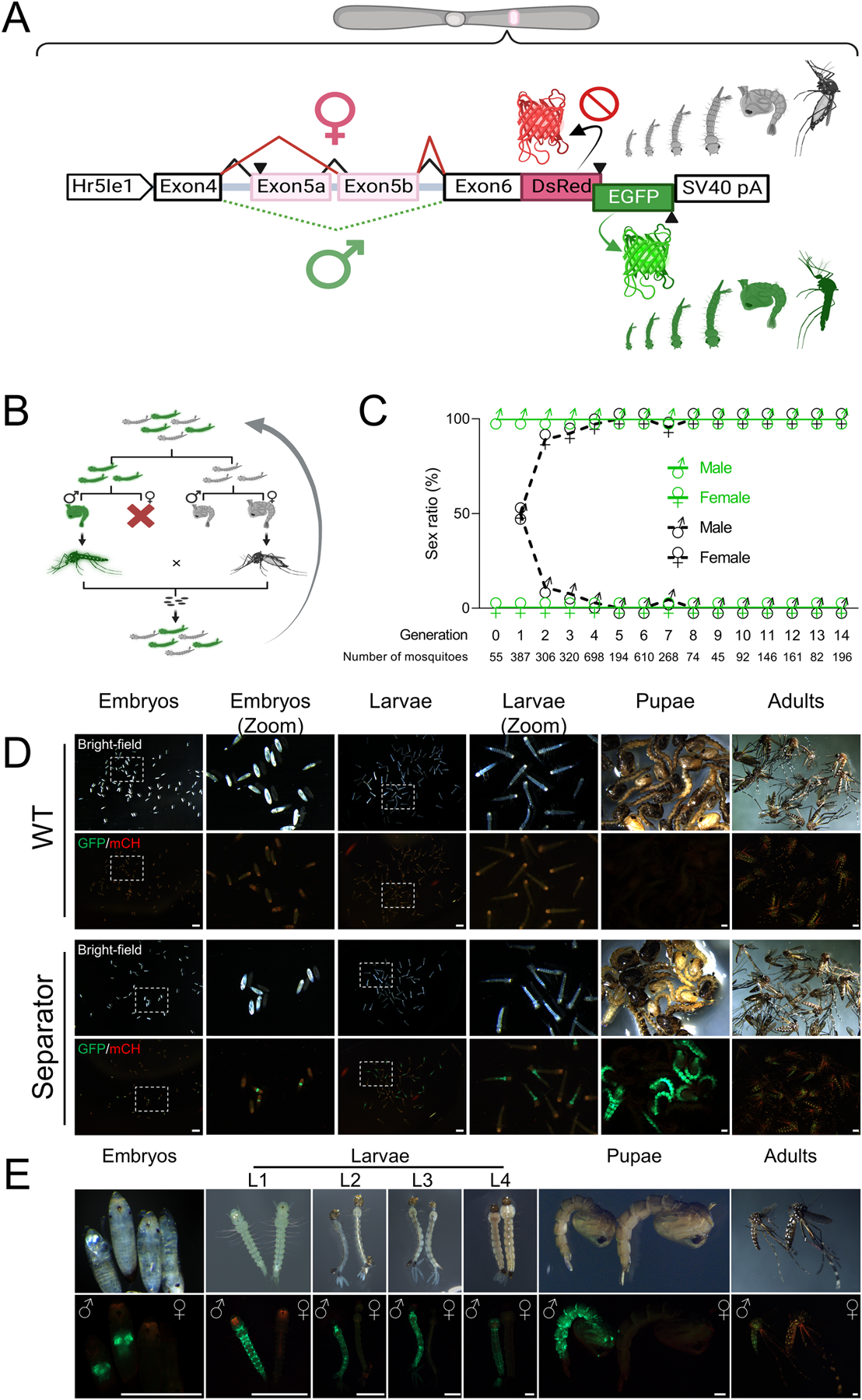
SEPARATOR in Aedes aegypti from PLOS Genetics 2023
Fig. 1 · SEPARATOR in Aedes aegypti. PLOS Genetics (2023), CC BY.
Thread I · Sex determination

Early sex separation using splicing markers.

We develop sex-specific genetic markers that separate male and female larvae at early stages. This improves the workflow for sterile-male and other release-based vector-control strategies.

Why it matters. Earlier sex separation improves the quality and scalability of male-release mosquito control programs.

Key papers. PLOS Genetics (2023); Infectious Diseases of Poverty (2024).
DoublesexTransformerAlternative splicingSIT
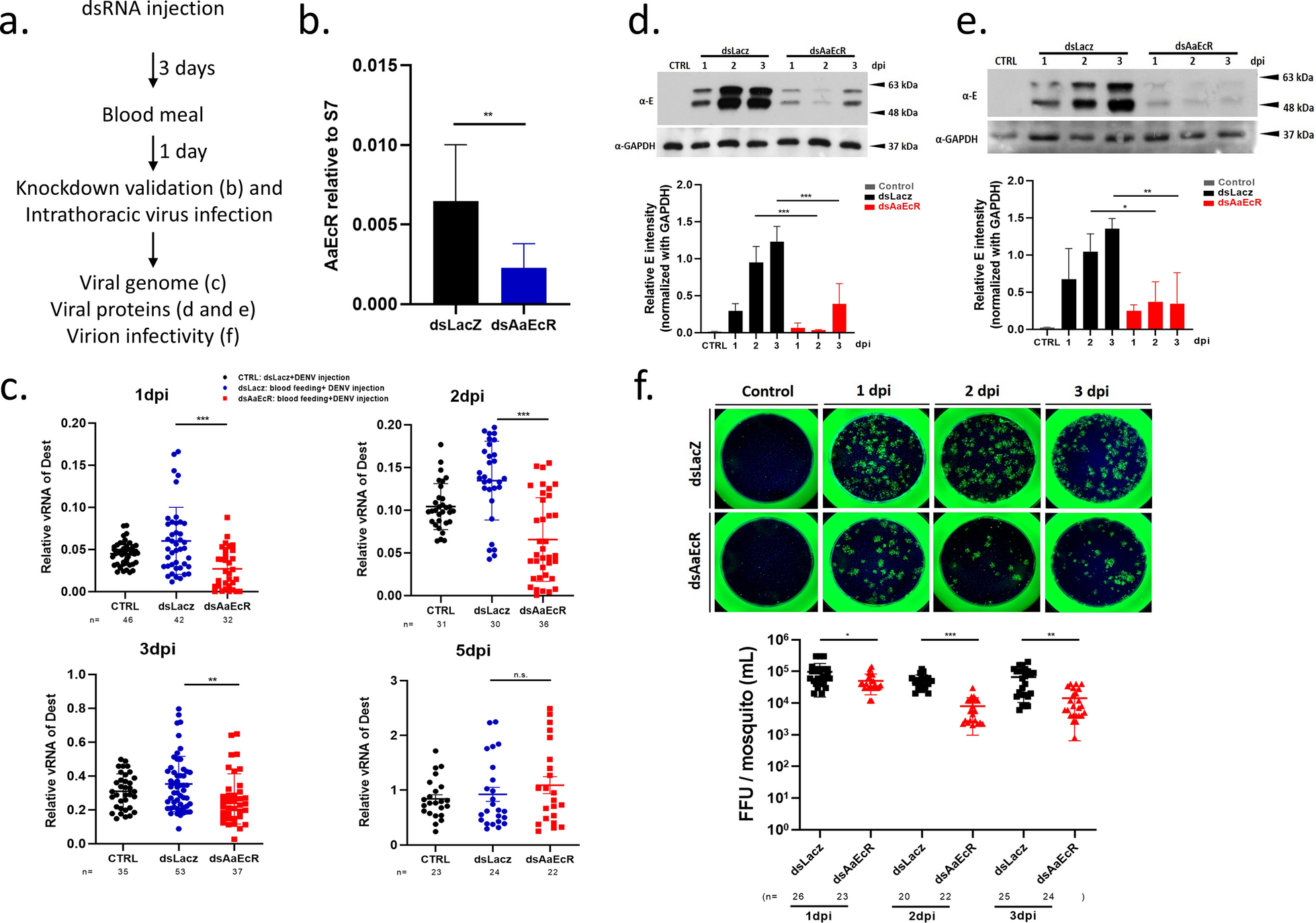
AaEcR and dengue virus replication from Parasites and Vectors 2026
Fig. 2 · AaEcR links dengue virus replication and reproductive control. Parasites & Vectors (2026), CC BY.
Thread II · Virus-host interaction

Mosquito host factors in flavivirus infection.

We identify mosquito proteins and physiological pathways that dengue, Zika, and related flaviviruses use during infection. Current work focuses on SUMO machinery, BiP, salivary proteins, blood glucose, and the ecdysone receptor.

Why it matters. Identifying host factors reveals mosquito-specific targets that may reduce virus transmission.

Key papers. Frontiers in Microbiology (2022); Parasites & Vectors (2026); Insect Biochemistry and Molecular Biology (2023, 2019); Parasites & Vectors (2021).

SUMOBiPEcRSalivaryDENV-2ZIKV
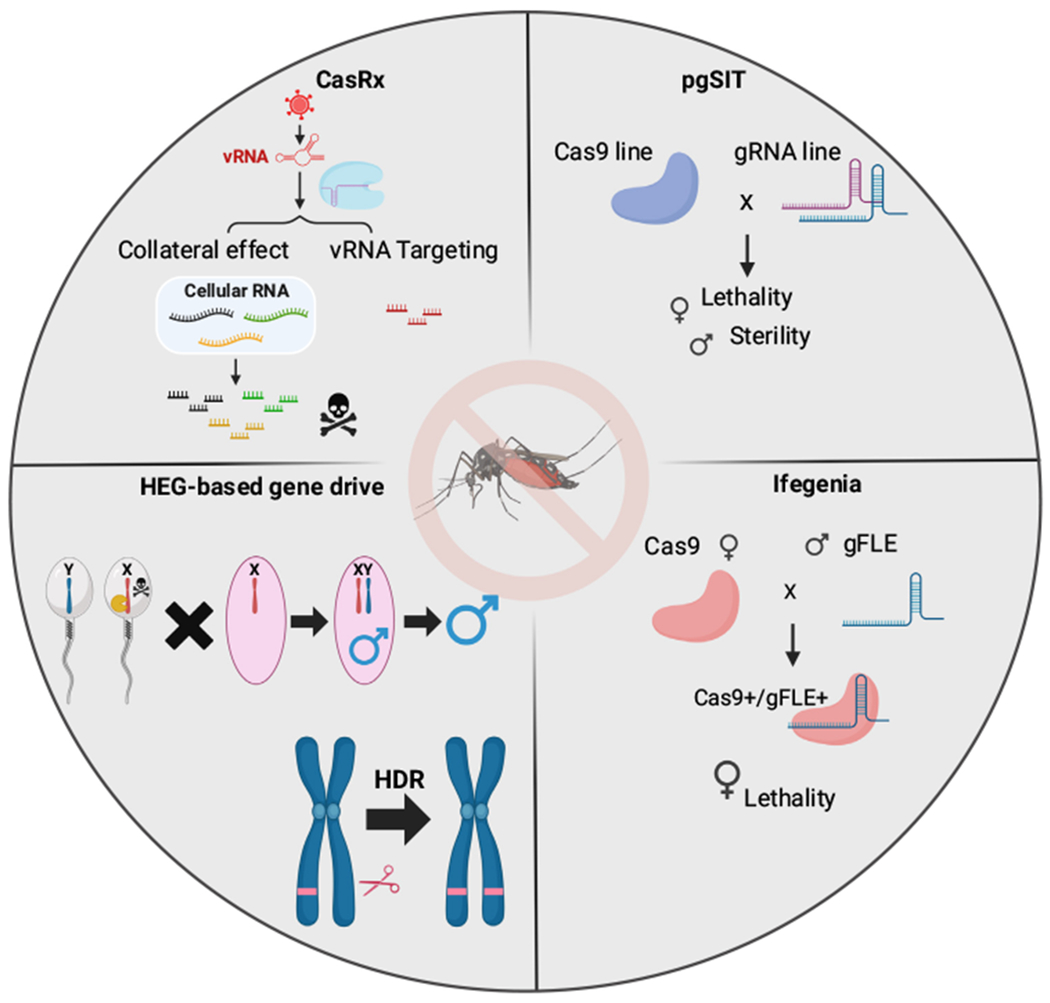
Synthetic biology-based strategies for mosquito control from Trends in Parasitology 2024
Fig. 3 · Synthetic biology-based strategies for mosquito control. Trends in Parasitology (2024), Figure 1.
Thread III · Synthetic biology

Genetic tools for vector control.

We design genetic circuits and virus-responsive systems that reduce mosquito competence for pathogen transmission. These tools include antiviral effectors, sex-selection systems, and gene-drive concepts.

Why it matters. Genetic tools can make vector control more targeted than broad-spectrum insecticide approaches.

Key papers. Insect Biochemistry and Molecular Biology (2022); Infectious Diseases of Poverty (2024); Trends in Parasitology (2024).

CRISPR-Cas9Gene driveInducible systemsPopulation suppression
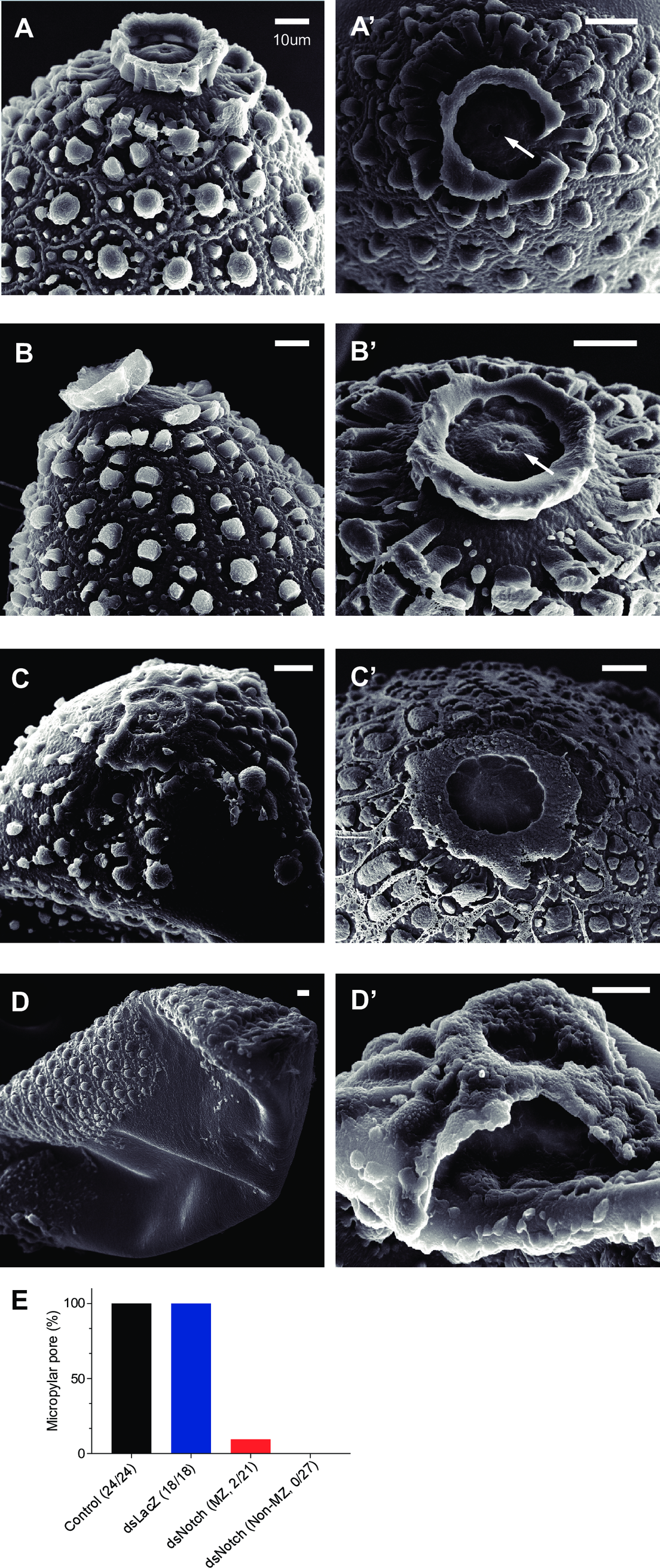
AaNotch egg micropyle and fertility figure from PLOS Neglected Tropical Diseases 2018
Fig. 4 · AaNotch controls mosquito egg micropyle formation and fertility. PLOS Neglected Tropical Diseases (2018), CC BY.
Thread IV · Reproductive biology

Reproductive pathways and population control.

We study pathways that control vitellogenesis, egg production, and female fertility. These pathways can reveal targeted strategies for reducing mosquito population growth and virus transmission.

Why it matters. Understanding fertility pathways helps identify precise ways to reduce mosquito population growth.

Key papers. PLOS Neglected Tropical Diseases (2018); Insect Molecular Biology (2020); Insect Biochemistry and Molecular Biology (2015).

VitellogenesisNotchUPRTORFertility
Publications · III — Publications03 / 09

Peer-reviewed publications from the past five years.

This list is updated automatically from the CV. Full bibliography: Google Scholar and ORCID.

Updated automatically from the CV · Last checked: September 2026

YearTitle & authorsVenueNote
2026 · 09

Aedes aegypti calreticulin promotes dengue virus replication and transmission by glycan-dependent binding to the prM protein.

Weng SC, Hsu YC, Tsao PN, Shiao SH

Insect Biochemistry and Molecular Biology194:104643
New
2026 · 05

An engineered viral RNA degrader on mitochondrial surface that mitigates RNA virus infection.

Chen CW, Liao WT, Chao T, Chen YH, Weng SC, Shiao SH, Kao CY, Li YJ, et al.

Nature Communications10.1038/s41467-026-73487-1
Article
2026 · 03

Dual functions of the Aedes aegypti ecdysone receptor in dengue virus replication and reproduction control.

Weng SC, Lin YS, Tsao PN, Shiao SH

Parasites & Vectors19(1):190
First
2025 · 12

A single-nucleus transcriptomic atlas of the adult Aedes aegypti mosquito.

Goldman OV, DeFoe AE, Qi Y, Jiao Y, Weng SC, Wick B, Houri-Zeevi L, Lakhiani P, et al.

Cell188,1–24
Atlas
2025 · 10

Morphological specializations of mosquito CO2-sensing olfactory receptor neurons.

Charara S, Choy J, Cauwenberghs K, Vijayakumar P, Ng R, Kim KY, Weng SC, Akbari OS, et al.

PNAS122 (43) e2514666122
PNAS
2024 · 11

Establishing a dominant early larval sex selection strain in the Asian malaria vector Anopheles stephensi.

Weng SC, Chen F, Li M, Lee S, Gerry C, Turksoy DC, Akbari OS

Infectious Diseases of Poverty13(1):83
First
2024 · 01

Advances and challenges in synthetic biology for mosquito control.

Weng SC, Masri RA, Akbari OS

Trends in Parasitology40(1):75-88
Review
2023 · 11

Efficient sex separation by exploiting differential alternative splicing of a dominant marker in Aedes aegypti.

Weng SC, Antoshechkin I, Marois E, Akbari OS

PLOS Genetics19(11): e1011065
First
2023 · 05

Co-infection of dengue and Zika viruses mutually enhances viral replication in the mosquito Aedes aegypti.

Lin DCD, Weng SC, Tsao PN, Chu JJH, Shiao SH

Parasites & Vectors16(1):160
Article
2023 · 04

The chaperone BiP promotes dengue virus replication and mosquito vitellogenesis in Aedes aegypti.

Yeh CT, Weng SC, Tsao PN, Shiao SH

Insect Biochemistry and Molecular Biology155:103930
Host factor
2022 · 04

SUMOylation Is Essential for Dengue Virus Replication and Transmission in the Mosquito Aedes aegypti.

Weng SC, Shiao SH

Frontiers in Microbiology13:801284
First
2022 · 03

A flavivirus-inducible gene expression system that modulates broad-spectrum antiviral activity against dengue and Zika viruses.

Weng SC, Zhou YX, Shiao SH

Insect Biochemistry and Molecular Biology142:103723
First
People · IV — People04 / 09

The team.

We are building a focused research group with close mentorship, clear project ownership, and shared technical support.

Shih-Che Weng
Principal Investigator

Shih-Che Weng, PhD

翁仕哲 助理教授

Shih-Che Weng trained in microbiology at NTU (PhD '20, MS '13) and completed postdoctoral work at the Akbari Lab, UC San Diego (2021-2025). His research connects mosquito vector biology, genetics, and synthetic biology for translational vector control. He returned to NTU as Assistant Professor in February 2025 to establish the lab.

EducationPhD · Microbiology · NTU · 2013-2020MS · Microbiology · NTU · 2011-2013BSc · Life Science · NDHU · 2007-2011
DistinctionsYushan Young Fellow · MOE · 20262030 Cross-Generation Emerging Young Scholar · NSTC · 2025Talent Recruitment Grant · NTU · 2025
PhD student · Sex determination

Yu-Xian Zhou

Studies alternative splicing readouts in Aedes aegypti sex determination.

NTU · Year 1 · Joined Aug 2025
PhD student · Virology

Yu-Chen Lee

Develops inducible antiviral expression systems for flavivirus suppression.

NTU · Year 1 · RA 09/2025; PhD 02/2026
Research assistant

Ho-An Chen

Supports mosquito husbandry, transgenic line maintenance, and CRISPR microinjection.

NTU · Wet lab · Joined Feb 2026
News · V — News05 / 09

Lab updates and recent activity.

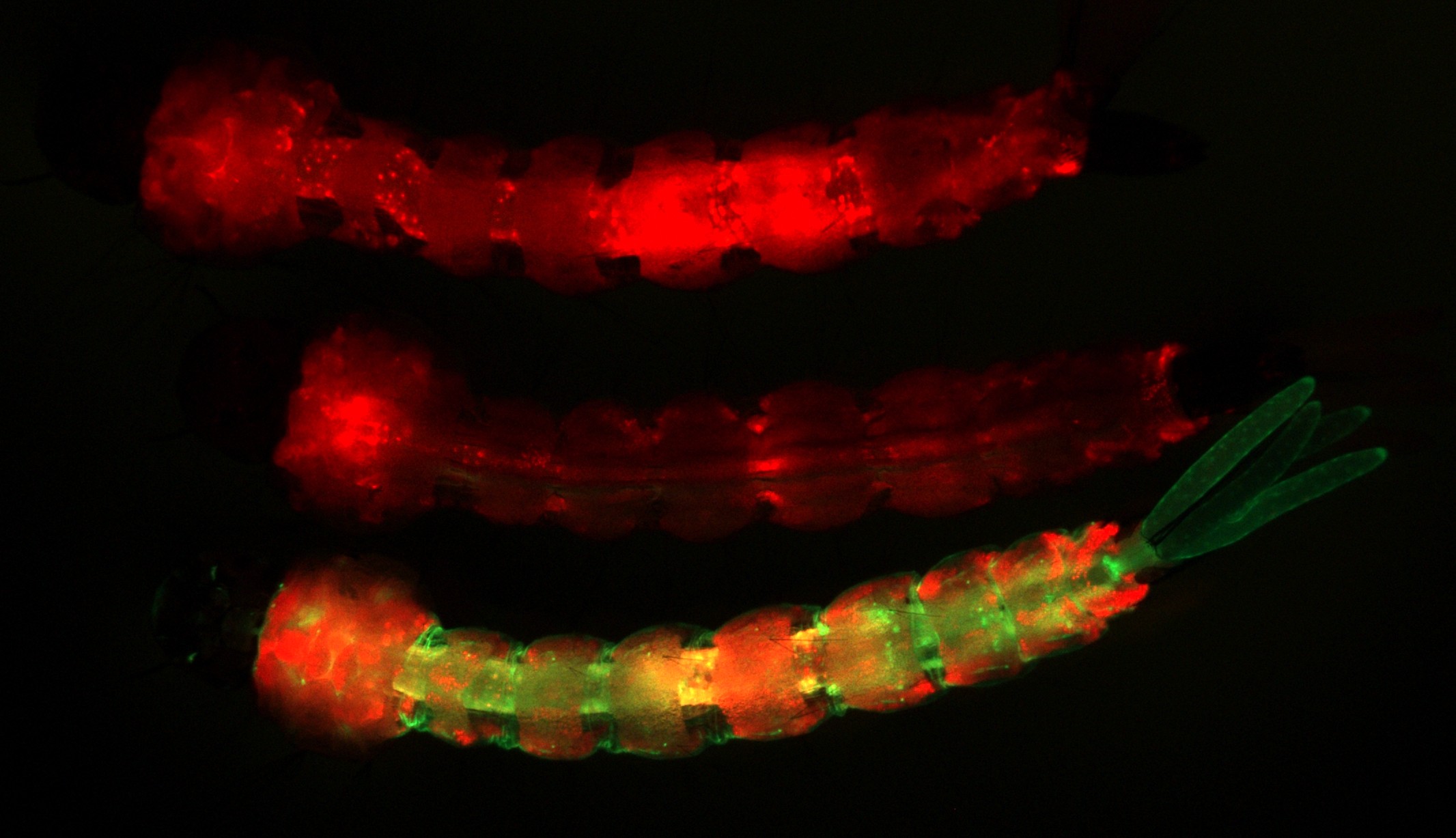
Mosquito research fluorescence image
March 2026 · Publication

New paper on the ecdysone receptor in dengue virus replication and reproduction.

This study examines how AaEcR links dengue virus replication with reproductive biology in Aedes aegypti.

Lab

Welcome Yu-Chen and Ho-An. The lab is expanding work on antiviral circuits and microinjection workflows.

Award

Shih-Che was awarded the Yushan Young Fellow from Taiwan's Ministry of Education.

Publication

A single-nucleus atlas of adult Aedes aegypti was published in Cell.

Publication

A study on mosquito CO2-sensing olfactory receptor neurons was published in PNAS.

Award

The lab received the 2030 Cross-Generation Emerging Young Scholar grant from NSTC.

Lab

The lab opens. Shih-Che joins NTU College of Medicine as Assistant Professor.

Press · VII — Press & media07 / 09

In the press.

Coverage of the lab's published work and recent grants.

Media coverage and public announcements will be added here.